“I'm Just Not a Maths Person” Is a Decision, Not a Fact
eStudent 360 Team
Team"I'm just not a maths person."
It is said calmly, as a statement of fact about how somebody is built, usually by a fifteen-year-old who has been quietly avoiding maths for three years. And it is treated by everyone in the room — including teachers, including parents — as a piece of information rather than as what it actually is, which is a decision that has already been made and is now being announced.
The same sentence exists for every subject. Not a science person. Not a languages person. Not creative. Not good with people. Each one closes a door and then describes the closed door as weather.
What is actually going on
Almost nobody arrives at that sentence through evidence. They arrive through a sequence.
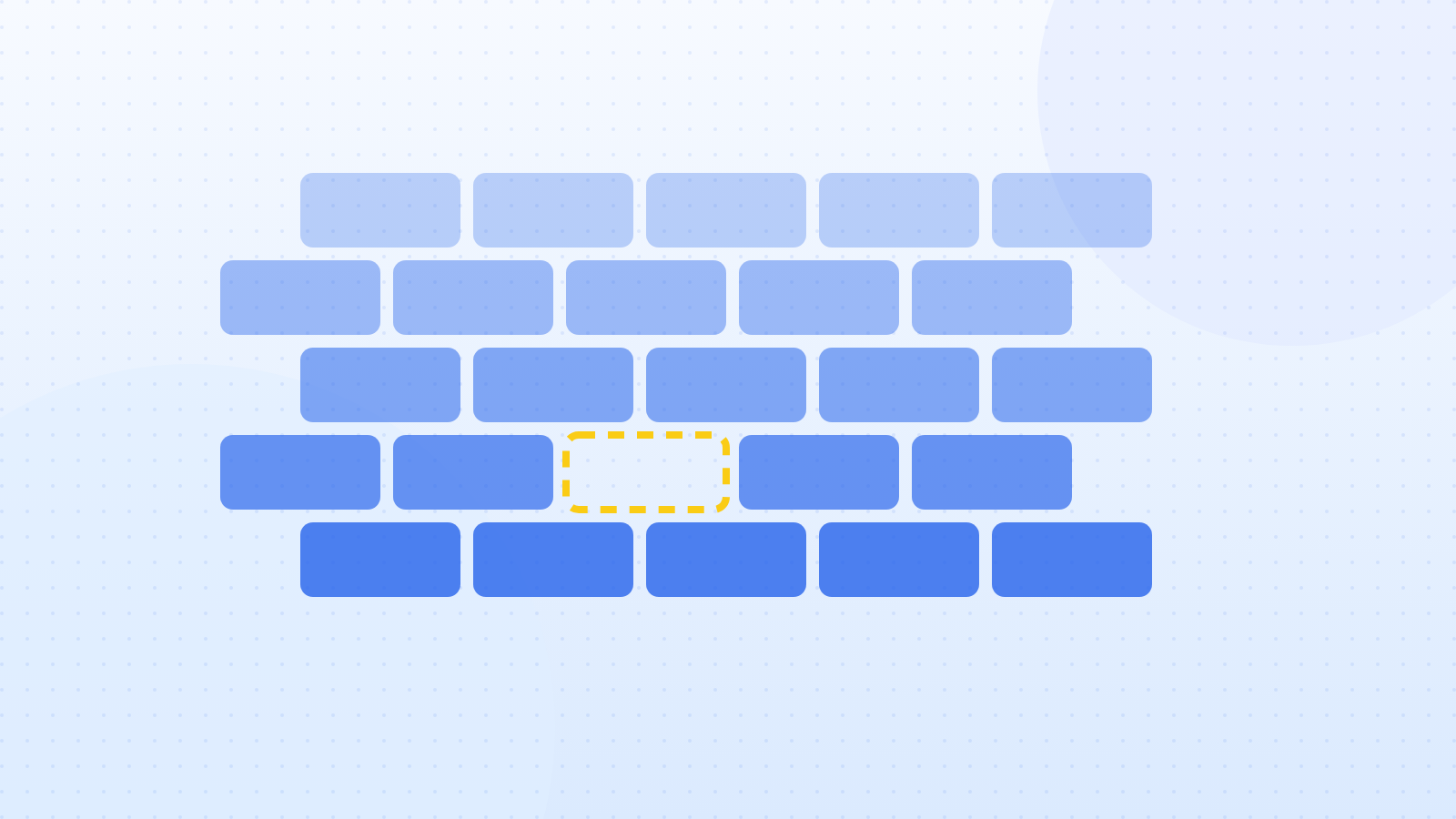
Something goes badly early — a topic missed while ill, a teacher who did not explain it, a term where something else was happening. The gap is small at that point and entirely fixable.
But the next topic builds on the missing one, so that goes badly too. Now the subject feels hard in a way it does not feel for the person sitting beside you, and the obvious explanation presents itself: they have the thing and you do not.
So you protect yourself. You stop asking questions, because asking reveals what you do not know. You do the homework you can and guess at the rest. You sit further back. You choose the other option whenever there is one. And three years later, the sentence is true — you are, at this point, genuinely not good at maths — and the reason is not the thing you think it is.
The uncomfortable bit
The doing-badly is not the interesting part. The interesting part is that the belief made a set of choices that guaranteed the outcome, and then pointed at the outcome as proof.
This is why the idea gets talked about at all. What you believe about whether ability can change decides whether you ask the question, attempt the hard problem, hand in the imperfect draft, or take the subject at all. Those choices, compounded over years, produce most of what looks from the outside like natural talent.
The free growth mindset material on Khan Academy is a reasonable place to see the idea laid out with the exercises attached, and it is written for students rather than about them.
Now the honest caveat
You will hear growth mindset claimed as a fix for almost everything, and that is worth being careful about.
The research has had a difficult decade. Some large studies found effects far smaller than the early popular accounts implied, and a few found close to nothing. Telling students to believe in themselves and changing nothing else does not reliably raise anybody's grades, and a school that puts a poster up has not done anything at all.
Which is exactly what you would expect, and it does not make the underlying point wrong. Belief is not a method. It changes which methods you are willing to use — and if the methods you then use are still re-reading your notes the night before, the belief will not save you. It is what you do in the study session that produces the result. Mindset only decides whether you turn up to it and how you respond when it is hard.
Treat it as permission to try, not as a technique. That is a smaller claim and a true one, and being able to tell those apart is a skill worth having about all advice.
What it looks like in practice
Not affirmations. Four fairly unglamorous habits.
Ask the question you are embarrassed to ask. The gap you are hiding is almost always smaller and more common than you think, and it is the thing blocking everything built on top of it. Nobody in the room is thinking about you as much as you fear.
Treat "I don't understand this" as a location, not a conclusion. It tells you where you are, not what you are capable of. The next sentence should be *which part*, not *therefore I am bad at this*.
Attempt things you will do badly. Volunteer the answer, enter the competition, put your hand up for the presentation. The gain is not the outcome. It is that doing something badly in public turns out to be survivable, and that discovery unlocks a great deal.
Notice the word "yet". Adding it is a small trick and slightly annoying, and it does change the sentence from a verdict into a position. *I cannot do simultaneous equations* becomes *I cannot do simultaneous equations yet*, and only one of those has a next step.
What this must not become
There is a cruel version of this idea, and it is common enough to name.
It says that since ability can grow with effort, anybody who is not succeeding has not tried hard enough. Applied to a student in a school with one textbook between four, a teacher covering three subjects they were not trained in, no electricity for half the prep hours, and a two-hour journey each way, that is not encouragement. It is a way of making a structural problem into a personal failing.
Effort is one variable. Teaching, materials, class size, time, health, money and whether anybody at home can help are all variables too, and several of them are not within a fifteen-year-old's control. A student can have an impeccable attitude and still be held back by conditions.
So hold both. Your beliefs about your own ability genuinely change what you attempt, and that is worth taking seriously because it is the part you can act on. It does not follow that everything in your way is your attitude. Sometimes the honest diagnosis is that you need a better explanation, a different teacher, a textbook, or somebody to sit with you for an hour — and identifying that is not defeatism, it is accurate.
The students this idea helps most are not the ones being told to try harder. They are the ones who had quietly concluded that trying was pointless, and who needed a reason to find out otherwise.
A word about comparison
Part of what makes the sentence stick is watching somebody else find it easy.
What you cannot see from the next desk is the rest of it. Whether their older sibling explained this topic to them last year. Whether they had the primary school that covered it properly. Whether they are, quietly, doing two hours a night. Whether they are, quietly, also lost and better at hiding it.
You are comparing your inside to their outside, which is not a comparison at all. The only useful benchmark is what you could do last term.
Praise is where this gets installed
Most of this is picked up long before anyone can choose it, from how the adults around a child talk about achievement.
*You're so clever* teaches that ability is a fixed possession, and that a bad result is evidence of losing it. Children praised that way become reluctant to attempt anything they might not be good at, because a failure now threatens the identity rather than the task.
*You worked hard on that* and *tell me how you solved it* teach something different: that the process is the thing, and that a difficulty is a normal part of it rather than a verdict.
Worth knowing if you are a student — it explains something about why you flinch at certain subjects. Worth knowing rather more if you are a parent, a guardian or a mentor, because you are installing this in somebody right now, in ordinary sentences, without meaning to.
The subject you avoided is not sealed
The practical consequence is narrow and specific.
If you have been telling yourself you are not a maths person, the useful next move is not to believe harder. It is to find the earliest topic you never properly understood — usually years before where your class is now — and fix that one thing, with help, on purpose.
It is unglamorous, it feels like going backwards, and it is very often the whole problem. Students who do it frequently discover that the ceiling they thought they had was a hole three years further down.
Sixteen is early to decide what kind of mind you have. Most people who are good at something were, at some point, visibly bad at it in front of other people, and simply carried on.